
Recruiting and retaining employees is becoming an increasing challenge across many industries. At the same time, customer expectations continue to grow. Facilities must remain clean, service must be fast, and daily operations must run efficiently.
As a result, more businesses are looking for ways to automate repetitive tasks and allow employees to focus on customers and higher-value activities. One of the most practical solutions is the use of service robots, which are already helping businesses in retail, hospitality, healthcare, offices, and restaurants around the world.
Cleaning Automation with Keenon KleenBot C40
In public environments, cleaning is a continuous process. Retail stores, office buildings, hotels, and healthcare facilities need to maintain cleanliness throughout the day, not only after working hours.
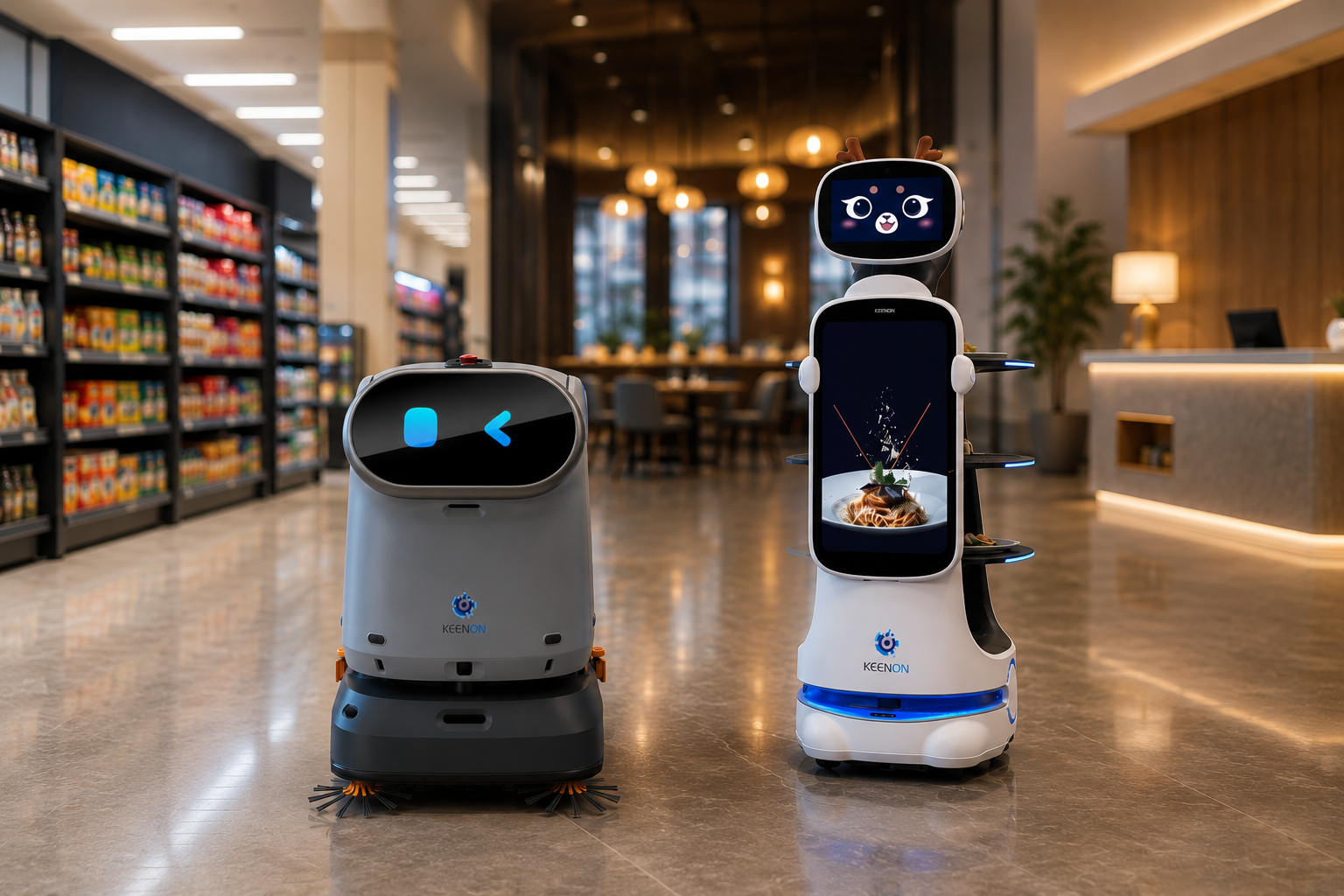
This is where autonomous cleaning robots are becoming increasingly popular. One such solution is the Keenon KleenBot C40, a professional floor cleaning robot capable of sweeping, vacuuming, scrubbing, and drying floors in a single cleaning cycle.
The robot navigates autonomously, avoids obstacles, and follows predefined cleaning routes with minimal staff involvement. This helps businesses maintain consistent cleanliness standards while reducing repetitive manual work.
The C40 is commonly used in shopping malls, retail stores, office buildings, hotels, hospitals, healthcare facilities, educational institutions, and other public spaces with regular foot traffic.
A Service Robot That Does More Than Deliver Food
The hospitality industry also relies heavily on repetitive tasks. Employees spend a significant amount of time moving between kitchens, storage areas, and customer zones.
This is where the Keenon DinerBot T10 can make a difference.
The T10 is a serving robot designed to transport food, beverages, and other items. By handling routine deliveries, it allows employees to focus more on customer service and guest experience.
Although most commonly used in restaurants and cafés, the DinerBot T10 is also suitable for hotels, hospitals, care facilities, and other environments where regular transportation of small items is required.
In addition, the robot features a large information display that can be used for promotions, special offers, or other company content.
Do Service Robots Replace People?
One of the most common questions is whether service robots are intended to replace employees.
In practice, businesses usually adopt robots for a different reason: to reduce repetitive work and make better use of existing resources. Robots take over routine tasks, while employees can dedicate more time to customer service, quality control, and responsibilities that require human judgement, communication, and experience.
See Keenon Robots in Action
The best way to evaluate the potential of service robots is to see them operating in a real environment.
IBSC offers live demonstrations, pilot projects, consultations, professional service and after-sales support, purchasing options, and financing solution.
Service robots are no longer a technology of the future. They are already helping businesses improve efficiency, maintain consistent service quality, and simplify everyday operations.